

The Growing Challenge of Nonprofit Board Leadership
Over the last 25 years, the number of nonprofits has grown dramatically. In Central Virginia alone, estimates suggest an increase of between 3,500 and 4,000 nonprofit organizations. Every one of those organizations needs a board. More importantly, every one of them needs a good board.
That is becoming increasingly difficult.
It is hard to find good board members. And frankly, it is hard to be a good board member in today’s environment.
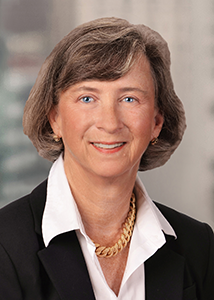
Katherine brings both professional consulting experience and firsthand governance leadership to her work. She is a BoardSource Certified Governance Trainer and has served on numerous nonprofit, educational, civic, and community boards across Virginia, including roles as board chair, governance committee chair, strategic planning committee chair, and search committee chair. Her board service includes organizations such as Christchurch School, The Memorial Foundation for Children, St. Michael’s Episcopal School, St. Catherine’s School, The Virginia Home for Boys and Girls, Heart of Virginia Council of the Boy Scouts of America, RichTech, Greater Richmond Partnership, and The Richmond Chamber.
Katherine holds an MBA from the University of North Carolina at Chapel Hill, a BS in Mathematics from Davidson College, and is a graduate of Leadership Metro Richmond. Her work is grounded in a practical understanding of the nonprofit and philanthropic landscape, particularly in Virginia, where she has helped mission-driven organizations align strong governance with effective execution.
For years, nonprofit leaders have talked about the “three Ts” of board service: Time, Talent, and Treasure. The goal for most boards is to have members who can bring at least two of the three. Today, checking even two boxes has become increasingly challenging.
The Time Challenge
Time has become one of the greatest barriers to nonprofit board service. Scheduling is harder for nearly everything we do. People retire later, work longer hours, travel more, and manage increasingly complex family and professional responsibilities.
Even highly committed board members can struggle to find time for:
- Board meetings
- Committee meetings
- Preparation and reading
- Strategic discussions
- Fundraising activities
- Community engagement
At the same time, the work of nonprofit governance has become more demanding. Boards are expected not only to provide oversight, but also to think strategically, support leadership transitions, strengthen community relationships, and help organizations navigate financial and operational complexity.
The Talent Challenge
There is no shortage of intelligent and capable people in our communities. The challenge is finding individuals with the specific skills, experience, and mindset that nonprofit organizations increasingly need.
For example, every board should have several financially savvy members. Not everyone with financial strength needs to be a CPA but having someone who understands the complexity of nonprofit accounting, nonprofit financial statements, cash flow, and organizational sustainability brings tremendous strength to a board. Yet the controller and CFO pipeline has become significantly smaller over the last decade, making those candidates harder to find.
Beyond financial expertise, boards increasingly need people who can:
- Think strategically
- Ask thoughtful questions
- Build relationships in the community
- Open doors for the organization
- Understand governance responsibilities
- Help organizations “see around corners”
The strongest board members are not simply supportive of the mission. They actively strengthen the organization’s future.
The Treasure Challenge
The financial expectations of board service have also become more complicated.
As the gap widens between the very wealthy, upper middle class, and middle class, there are not enough individuals who are both willing and financially able to support multiple nonprofits at significant levels.
The traditional model of “you support my nonprofit, and I’ll support yours” is becoming harder to sustain. At the same time, nonprofits are facing increasing competition for philanthropic dollars, volunteer leadership, and community attention.
Organizations that rely solely on financial capacity as the primary criteria for board recruitment may find the pipeline shrinking.
Why Great Boards Matter
Strong boards and strong nonprofit CEOs tend to reinforce one another. Great boards help organizations:
- Think more strategically
- Strengthen accountability
- Expand community influence
- Support fundraising and partnerships
- Navigate leadership transitions
- Build long-term sustainability
A high-functioning board also improves the return on the CEO’s time and energy. Nonprofit CEOs invest substantial time working with boards. When the board is engaged, thoughtful, and strategic, the organization becomes stronger.
Great boards rarely happen accidentally. They are built intentionally over time.
How Organizations Attract Strong Board Members
Strength attracts strength. Talented people are drawn to organizations that are well-led, well-organized, and mission-focused.
Three things consistently help organizations attract strong board members:
1. Strong Leadership
A strong CEO who communicates a compelling vision, builds trust, and represents the organization well is far more likely to attract strong board members. People want to be associated with organizations that are making meaningful progress.
2. Good Processes
Busy and talented people want their time used wisely. Organizations that thoughtfully cultivate board candidates, provide strong orientation and education, communicate effectively, and design engaging board meetings are more likely to attract and retain strong members. Board meetings should not feel like “necessary but boring” reporting sessions. The best meetings create opportunities for strategic discussion, learning, problem-solving, and meaningful engagement.
3. A Culture of Accountability and Excellence
Healthy board cultures matter. Board members are more likely to stay engaged when expectations are clear, participation is meaningful, and fellow board members follow through on commitments. Strong cultures create momentum. High-performing board members tend to attract other high-performing board members.
Organizations should be intentional about creating a culture of:
- Accountability
- Respect
- Partnership
- Gratitude
- Engagement
- Excellence
Final Thoughts
The work of nonprofits is too important to settle for passive governance.
Strong boards do not happen by chance. They are built intentionally through thoughtful recruitment, meaningful engagement, clear expectations, and strong leadership.
Time, talent, and treasure are increasingly stretched; organizations that invest in governance will be far better positioned to fulfill their missions, support their CEOs, and strengthen the communities they serve.
Questions Every Board Should Ask
As nonprofits continue to grow and evolve, boards should periodically ask themselves:
- Do we have the skills and perspectives we need for the future?
- Are we cultivating future board leaders now?
- Are our meetings strategic and engaging?
- Do board members clearly understand expectations?
- Are we using people’s time wisely?
- Are we creating a culture that attracts strong people?




 Data Directions Inc.